
Before 1800
Beacon fires on the headlands
Before permanent towers, exposed coastal heights carried simple fires that warned mariners away from shoals and narrow approaches.
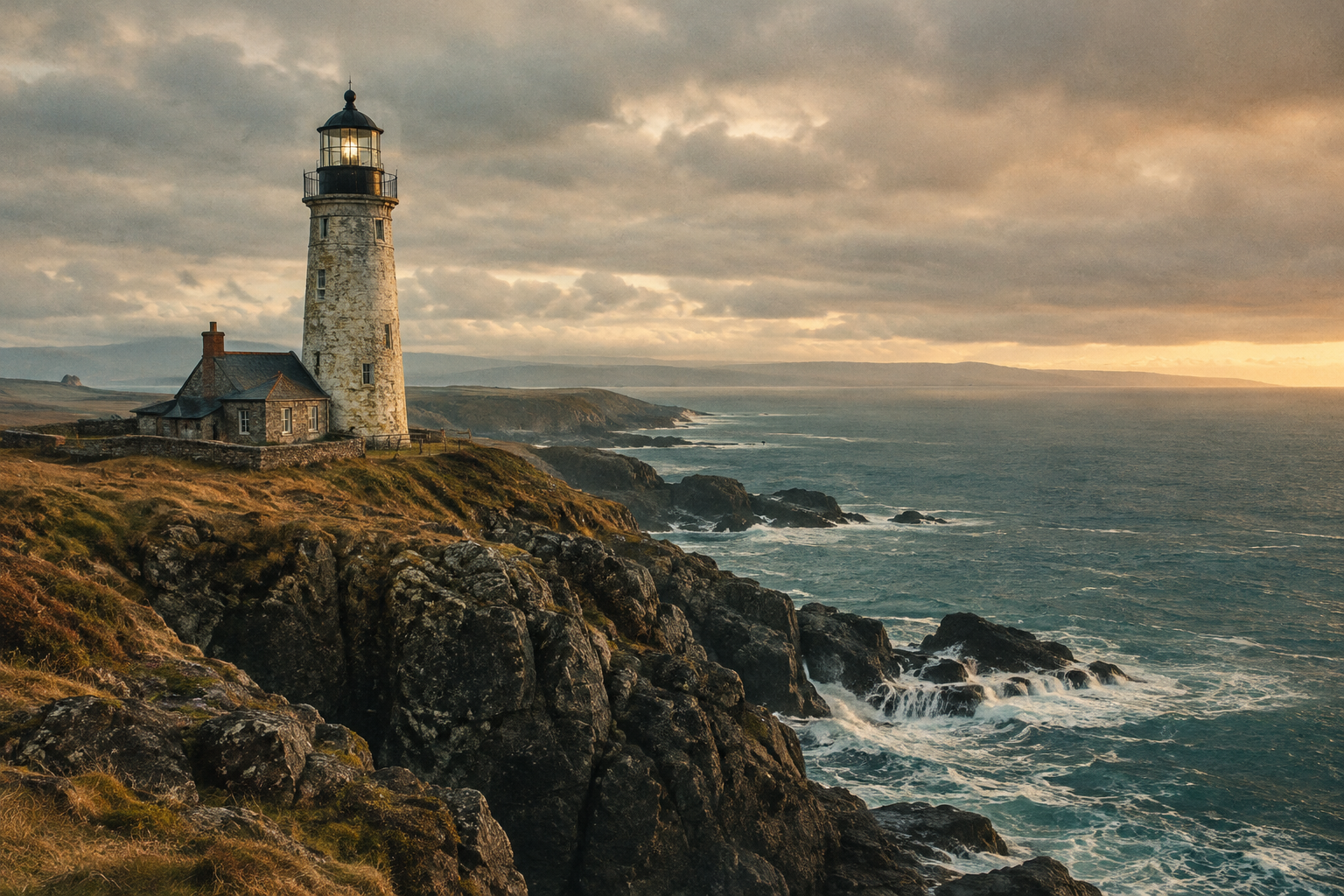
Northern Coast Historical Reference
Explore archive photographs, keeper stories, and records of preserved towers that trace how coastal navigation shaped life along the northern shoreline.
Explore the ArchiveHistorical timeline
A concise chronology of how northern-coast lighthouse infrastructure, keeper practice, and preservation priorities evolved across eras.
Before 1800
Before permanent towers, exposed coastal heights carried simple fires that warned mariners away from shoals and narrow approaches.
Early 1800s
Permanent stone and brick towers created dependable landmarks, with keepers tending lamps through long nights and severe weather.
Mid-1800s
Precision glass lenses concentrated modest flames into stronger beams, extending the reach and distinct character of coastal lights.
Early 1900s
Improved fuels and electric lamps reduced daily maintenance while preserving each station’s recognizable signal.
Late 1900s–Today
Automation ended many resident postings, while preservation groups began protecting towers, records, and the memory of keeper life.
Photo Archive
These are interpretive archival-style views assembled to illuminate each era of northern-coast lighthouse history.
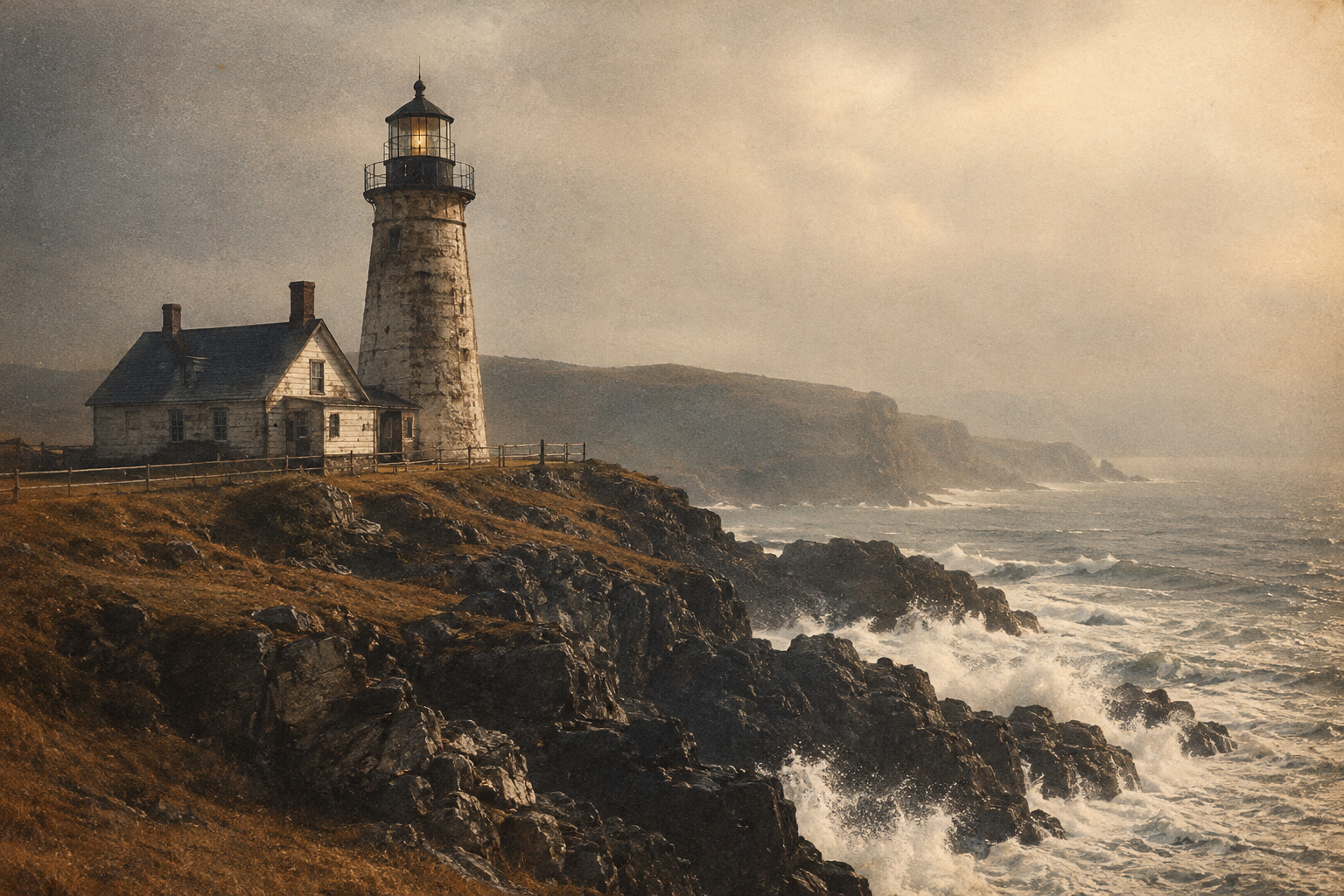
c. 1880s
An interpretive view of a masonry tower keeping watch over a rough northern approach.
Interpretive archival-style rendering assembled for historical context.
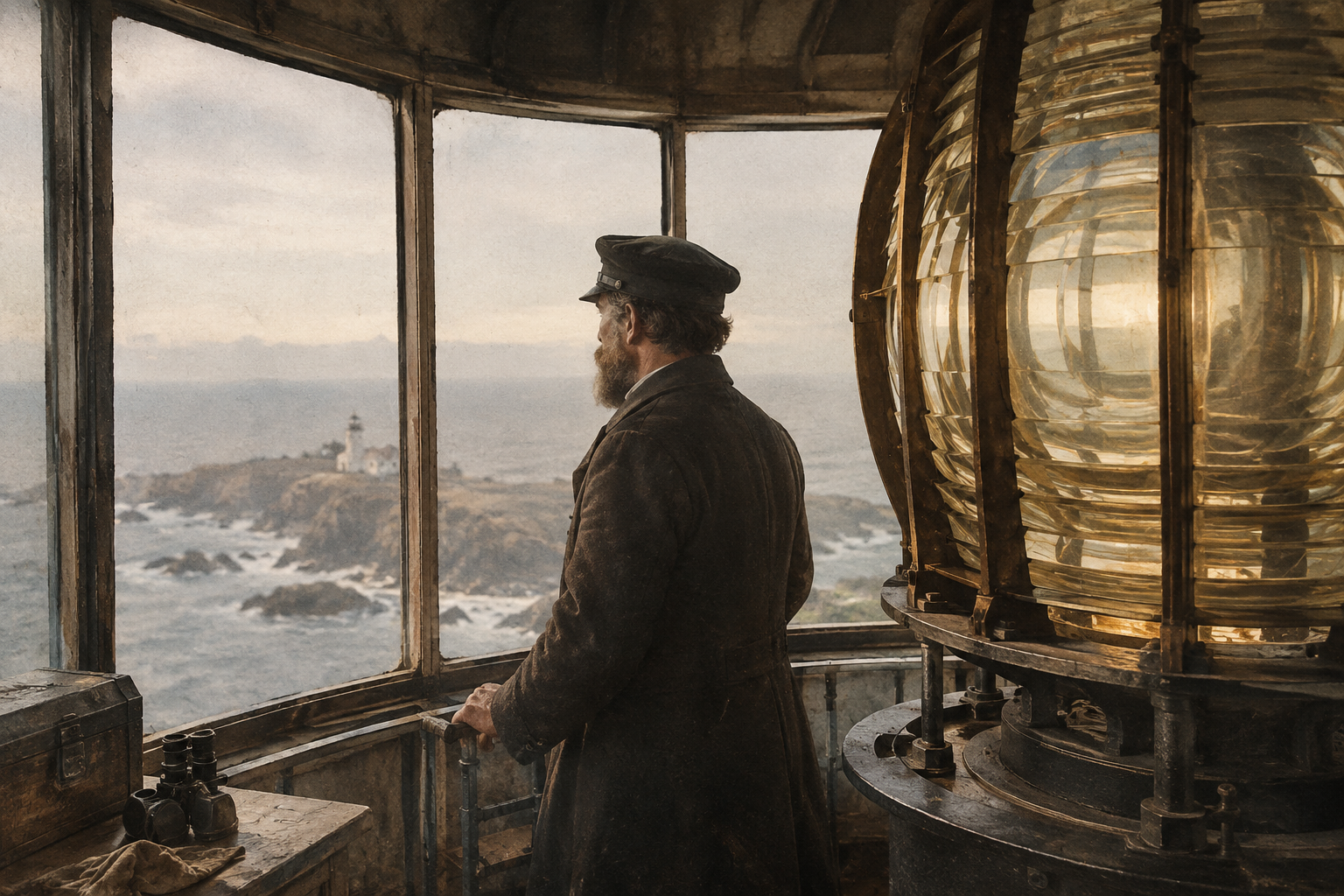
c. 1890s
Glass, brass, and careful maintenance shaped the nightly ritual of tending the light.
Interpretive archival-style rendering assembled for historical context.
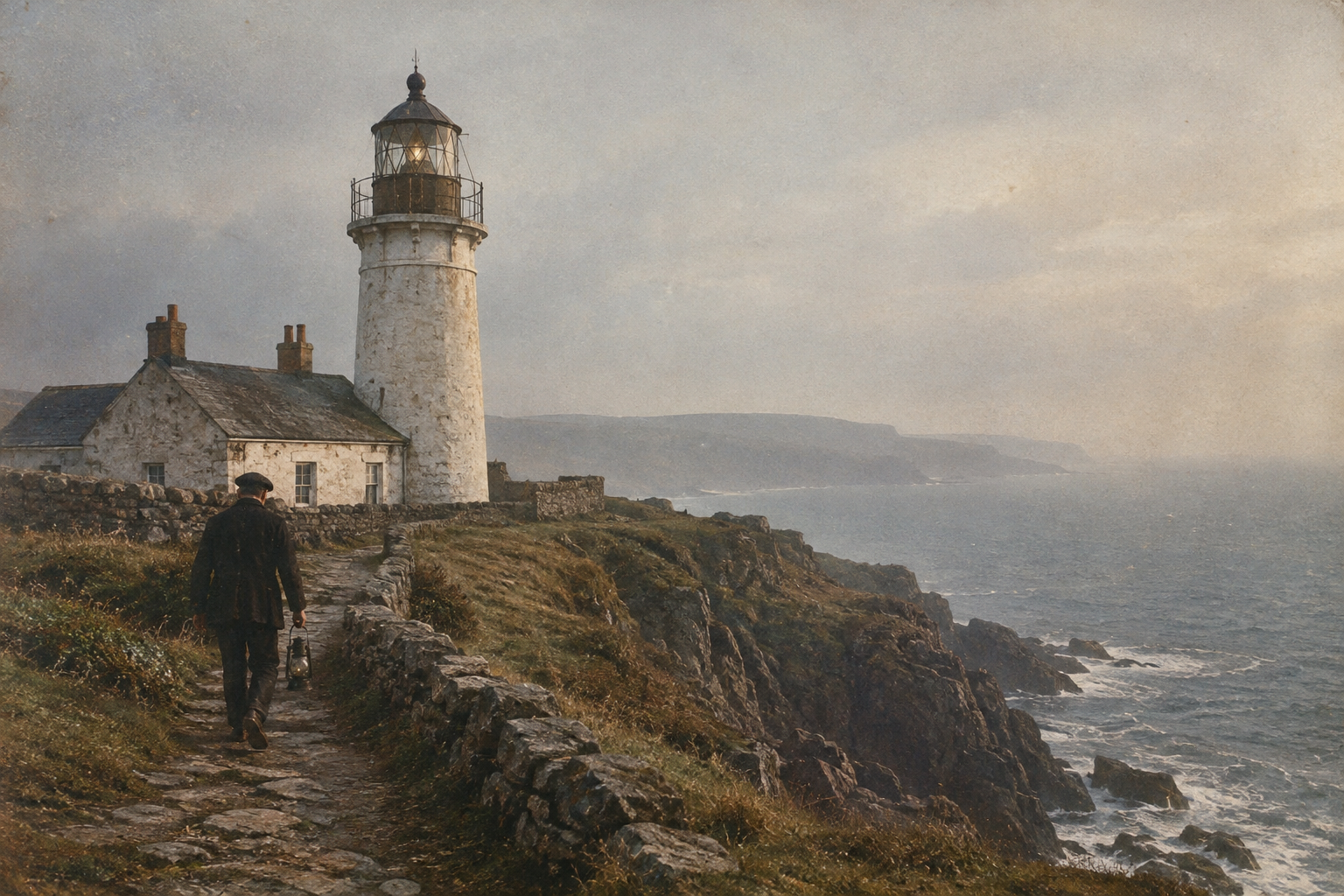
c. 1910s
A narrow route between dwelling and tower recalls the repeated journeys of each watch.
Interpretive archival-style rendering assembled for historical context.
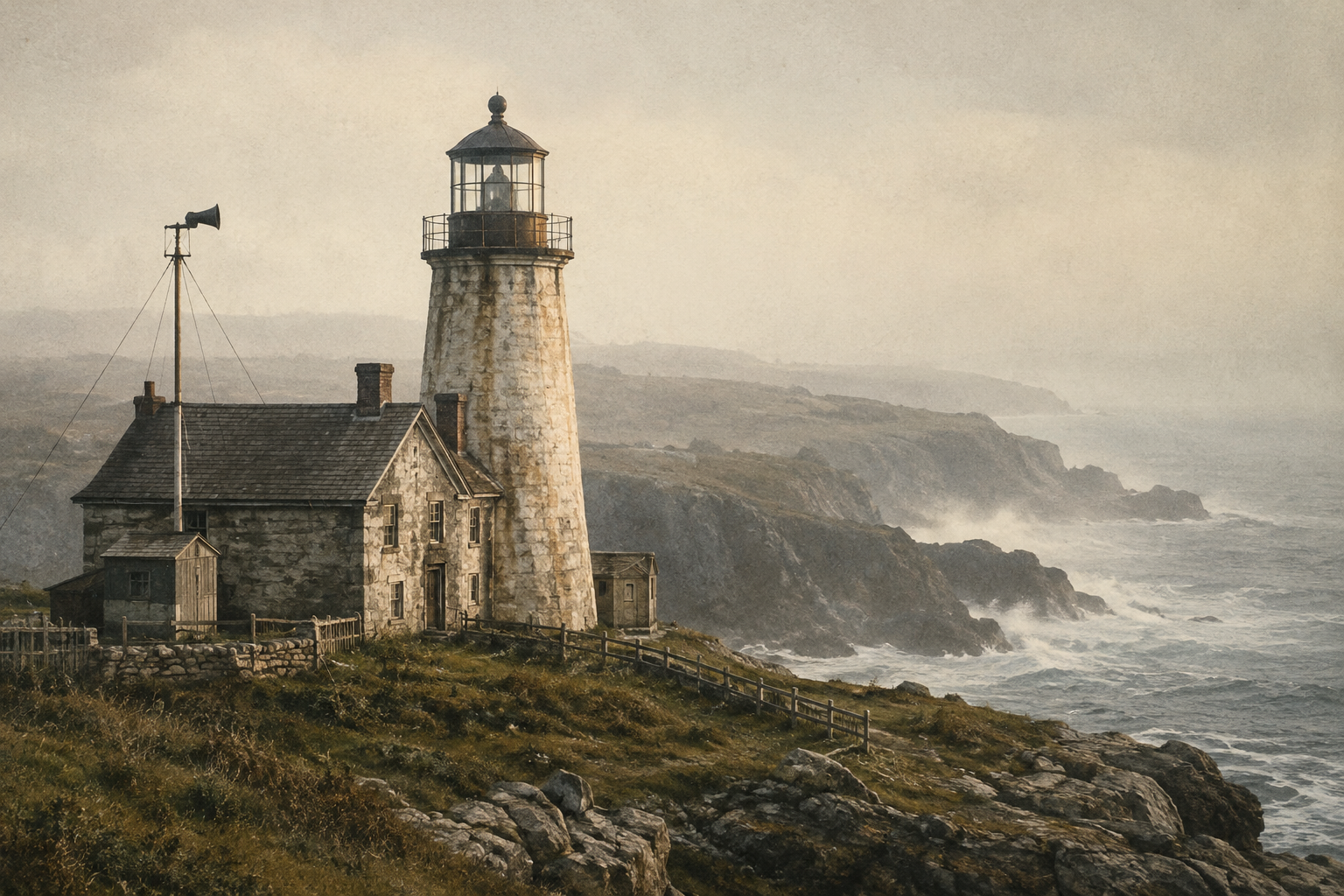
c. 1930s
Low visibility made sound as important as light along exposed stretches of coast.
Interpretive archival-style rendering assembled for historical context.
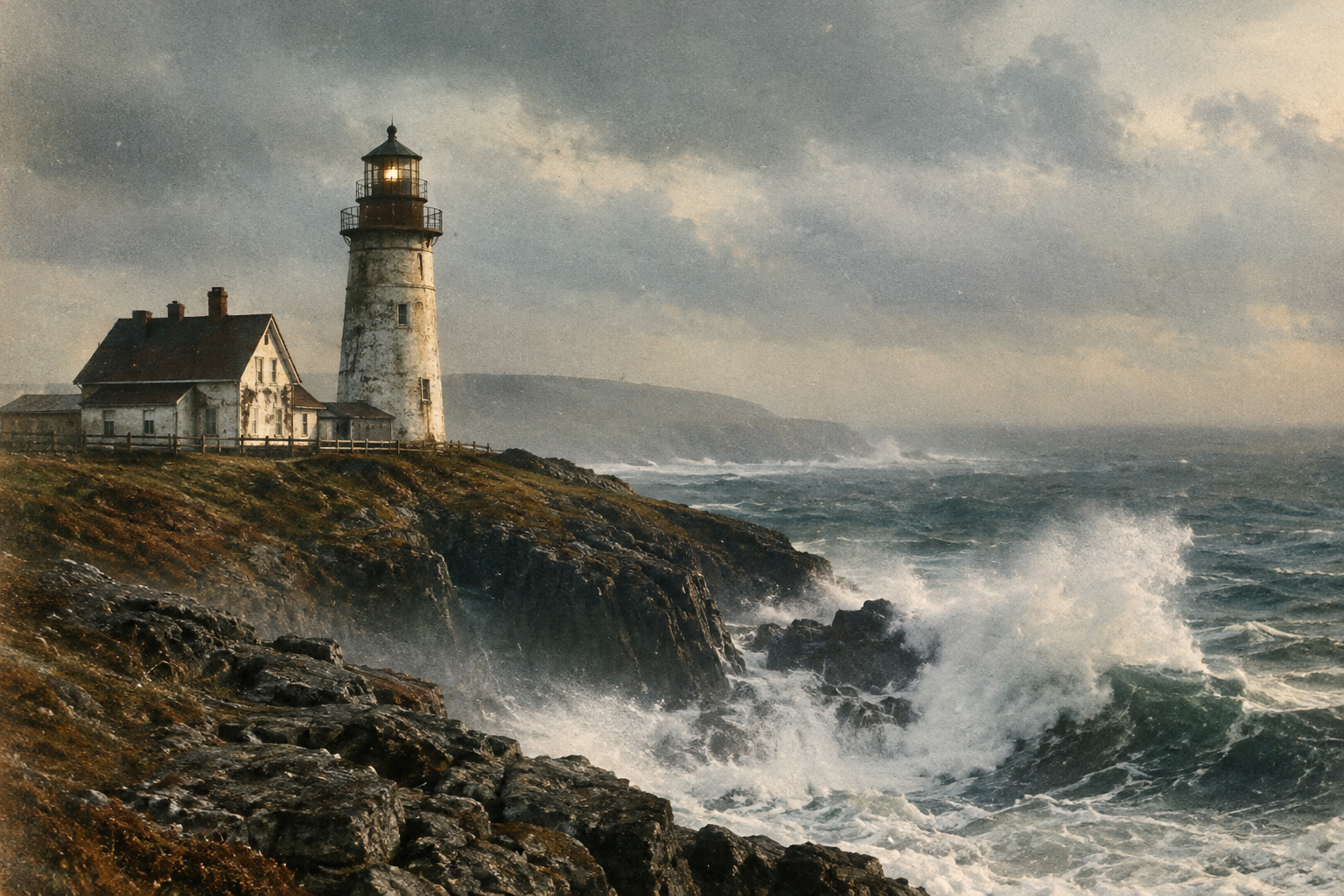
c. 1950s
Weather defined the work, isolating stations while testing buildings and equipment.
Interpretive archival-style rendering assembled for historical context.
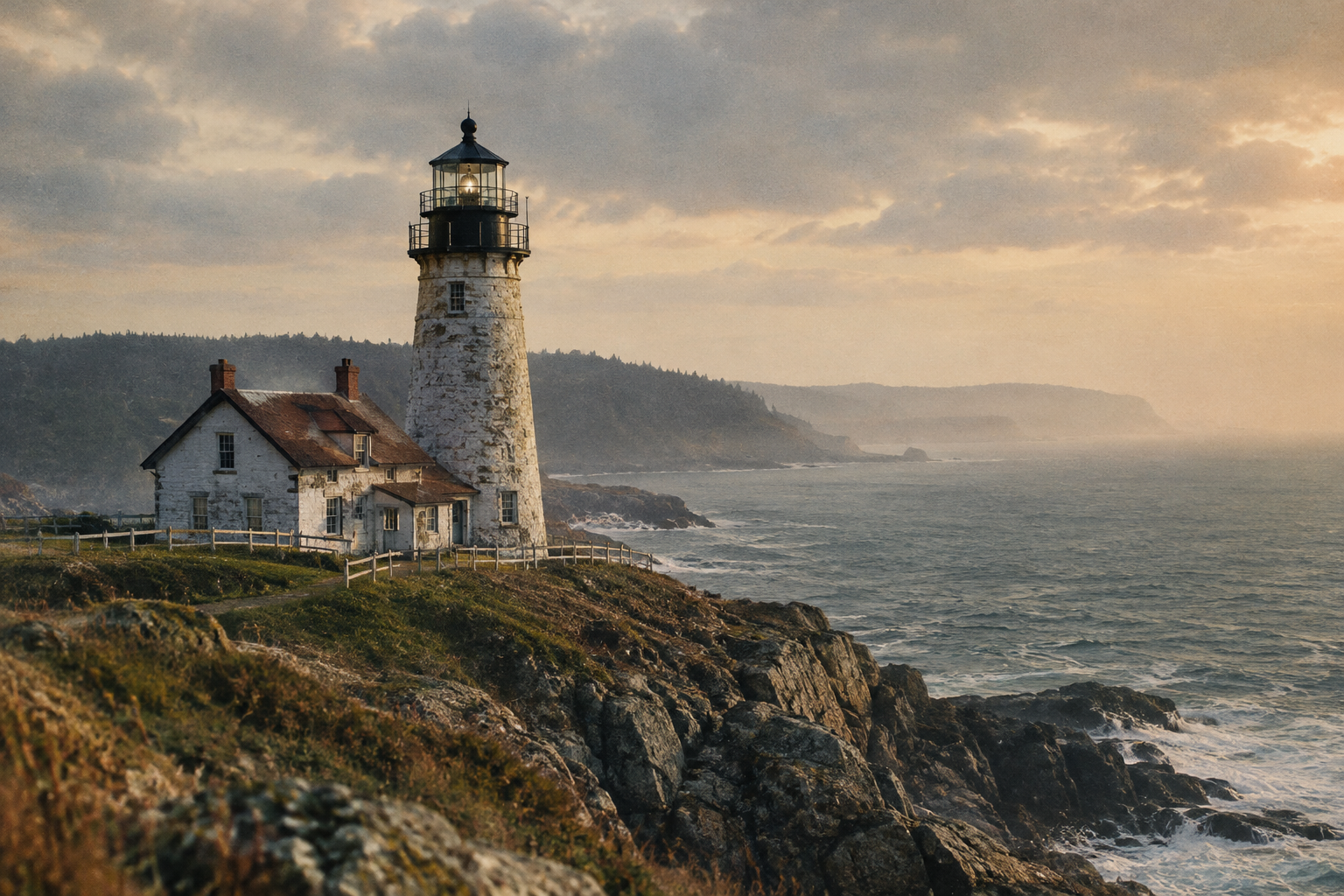
Present day
Restoration protects the structure while keeping its maritime purpose legible to new visitors.
Interpretive archival-style rendering assembled for historical context.
Keeper Narratives
These vignettes are interpretive composites informed by common lighthouse duties, weather records, and documented family life at northern coastal stations.
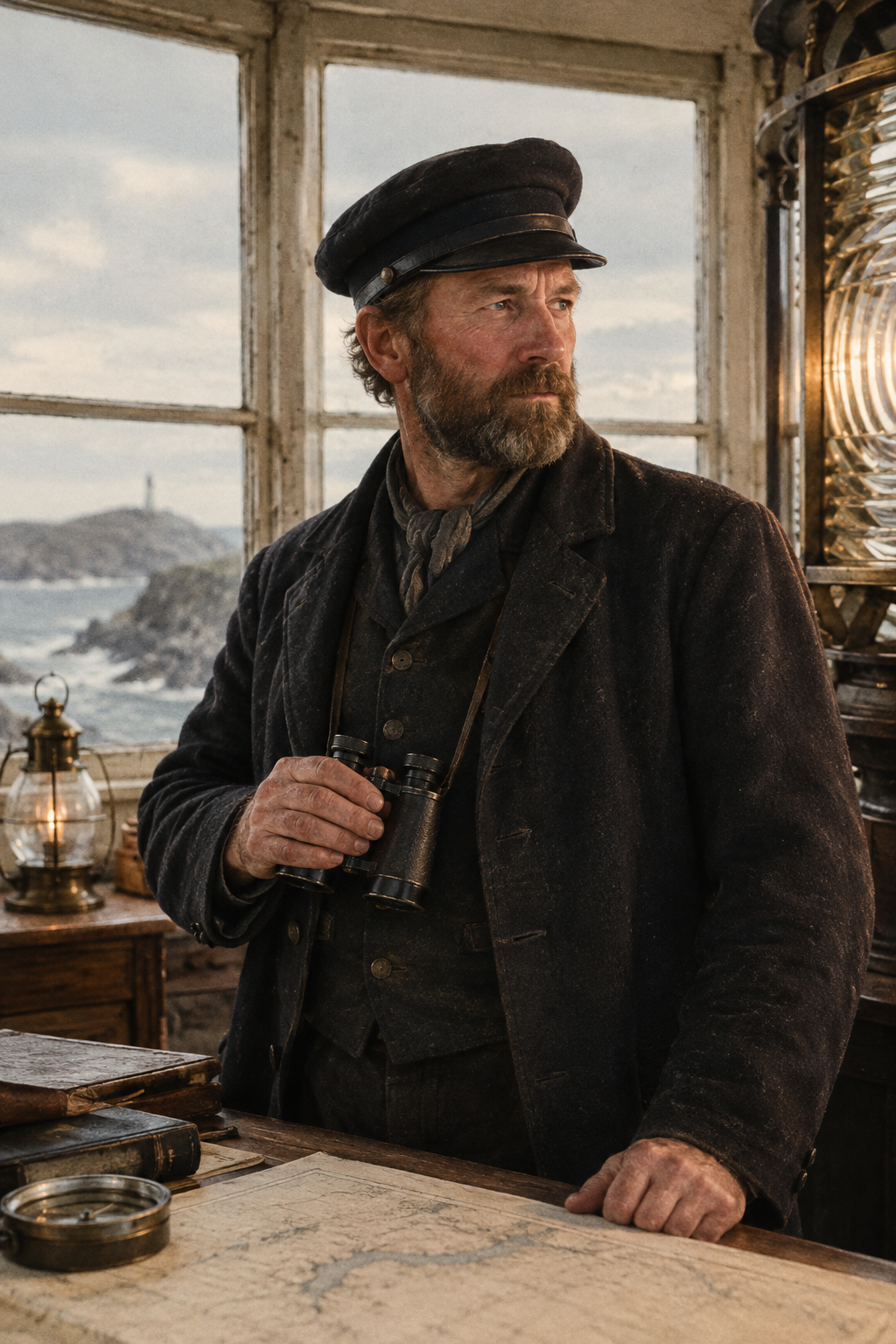
Principal keeper · late 1800s
The lamp was only part of the watch; the weather, the glass, and the sea each demanded their own attention.
Interpretive context: An interpretive profile inspired by common duties recorded at isolated lighthouse stations.
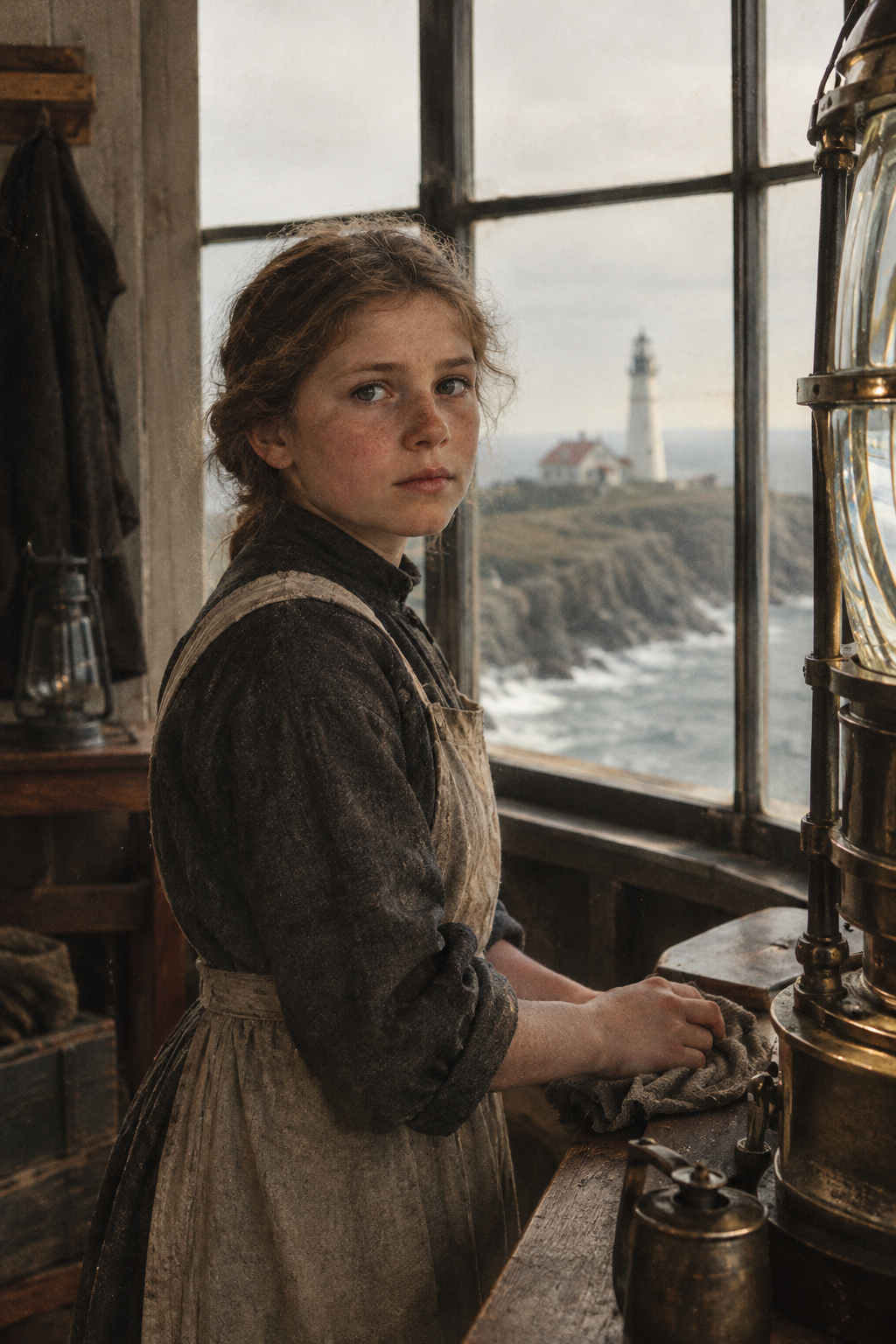
Keeper’s daughter · early 1900s
We learned the rhythm of fog bells before we learned the hours on a clock.
Interpretive context: An interpretive profile reflecting the family life that often sustained remote stations.
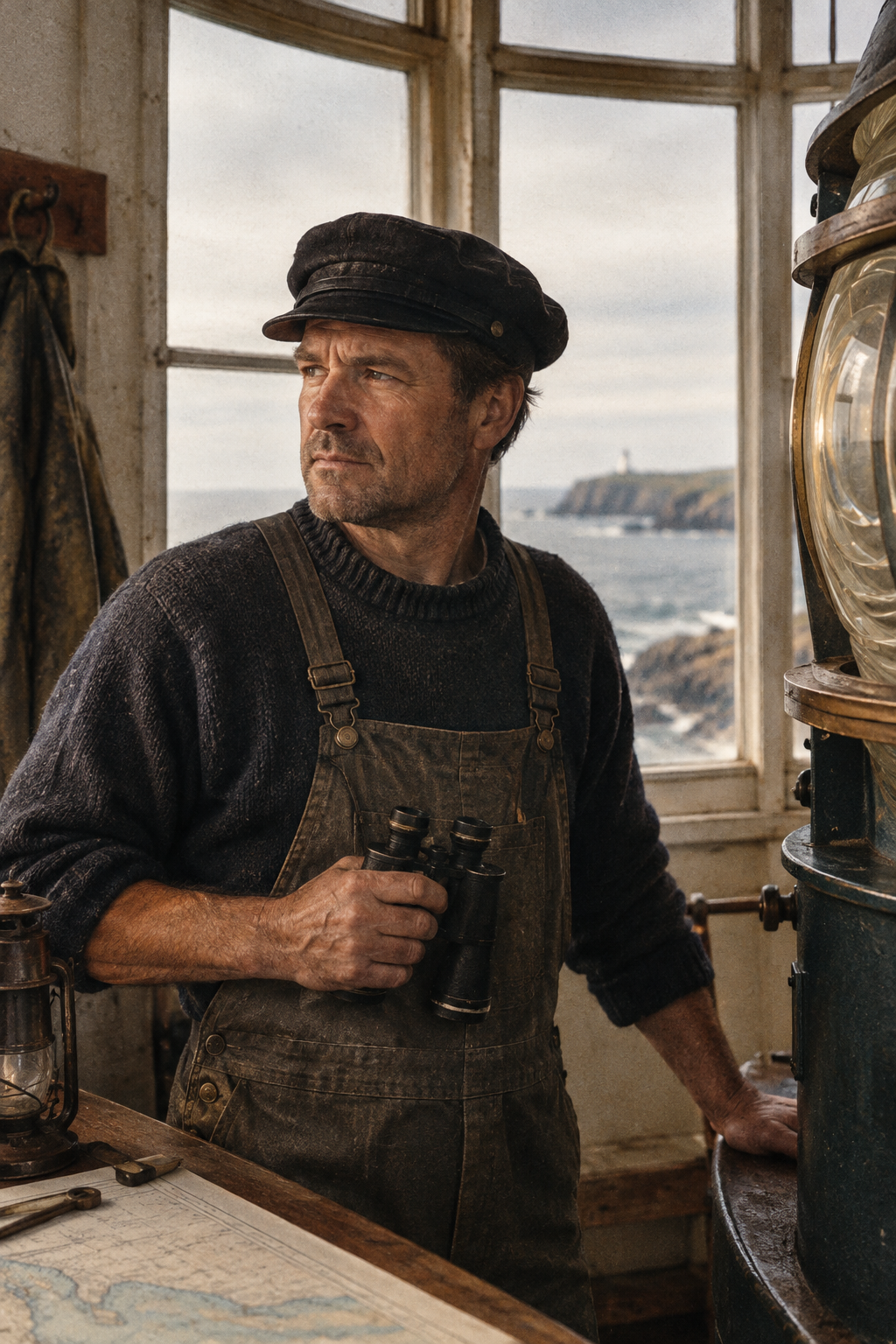
Relief keeper · mid-1900s
Every station had a different voice, but the responsibility was always the same: keep the signal true.
Interpretive context: An interpretive profile based on the routines of relief and rotational lighthouse service.
Interpretive reference
A hand-inked reference view connecting keeper narratives and dated records to surviving landmarks along the northern coast.